
I Am
Vol. 2, Issue 4 | February 23, 2026 - March 1, 2026
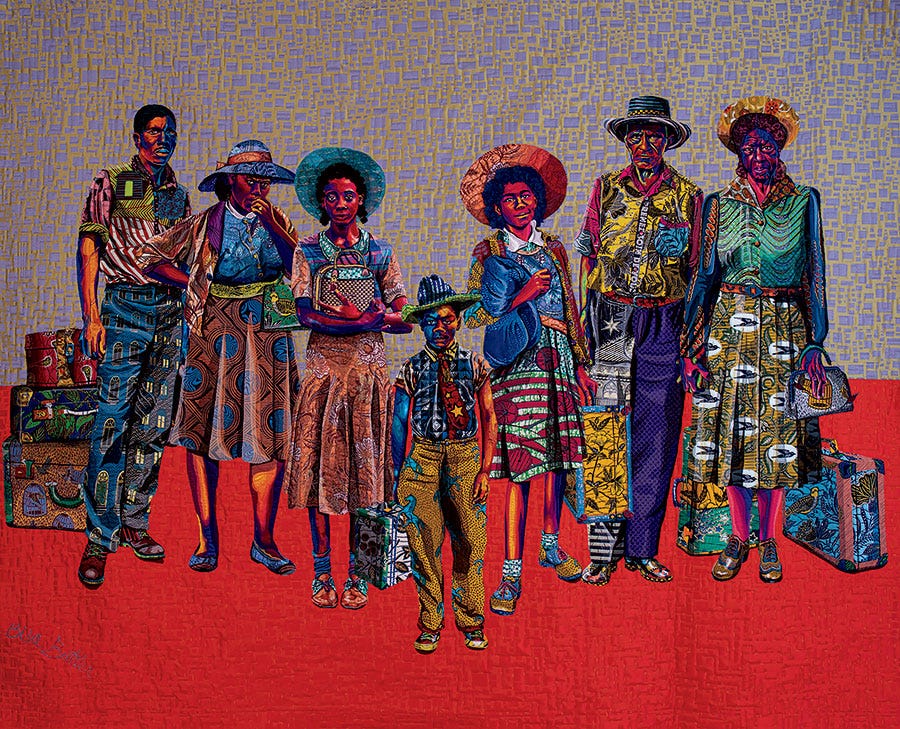
And God said unto Moses, I AM THAT I AM: and he said, Thus shalt thou say unto the children of Israel, I AM hath sent me unto you.
—Exodus 3:14
CURATOR’S NOTE
I heard about it the way children absorb what they are not supposed to know — in pieces, in the quiet after adult gossip.
A girl across the hall I’d known since first grade raised her hand with the white girls.
She lived in Washington Heights, rode Bus #242.
Her mother had told her she was white.
She was not white.
Jesse Jackson was running for President of the United States that year. The Duval County school district had been defying Brown v. Board since before I was born. They did not comply until 2001.
The courts needed numbers. How many. Of what kind. Every morning my teacher had called for hands. Black girls. Then Black boys. Then the others. She did it the same way she took attendance. Evenly. Without ceremony.
My grandmother gave me three heirlooms before I started first grade.
I am Black.
I am a girl.
I am smart.
Never apologize for any of it, she said.
The same way she taught me the Psalms. Like she was placing something worn smooth by every hand that had carried it before mine.
I raised my hand. High.
The school needed numbers. How many. Of what kind. The teacher wrote it down. The morning moved on.
Later that afternoon the hallway was humming. Every child from second grade through fifth had been given a ballot. The adults were voting at the front of the school. Students catching each other’s eyes. Snaggle-toothed smiles across the breezeway.
We walked through two sets of double doors. Past the music suite on the right, past the bathrooms on the left with the water fountain between them, and into the school library. I stopped just inside the entrance. Breathed. The smell of those books.
And on the spines: Paul Laurence Dunbar. Phillis Wheatley.
I approached the cardboard booth, drew the red curtain, marked the box next to Jesse Jackson’s name with a No. 2 pencil and placed it in the box.
I was doing something important.
The giddy 7-year-old knew only what her hands could hold: the red curtain, the No. 2 pencil, the names on the spines, the smell of something that had been waiting for her.
Three years later I found Maya Angelou in that library. I Know Why the Caged Bird Sings. I checked it out twice before I finished it.
My grandmother had known this moment was coming.
My grandmother wasn’t alone.
I am somebody.
That sentence had been traveling before Jackson carried it. Through church basements on Chicago’s South Side. Through gymnasiums and union halls. He’d been leading that chant since 1963. Twenty-two years old. The theology from Howard Thurman. Before Thurman, the Black Church. Before that, burning bushes and names that required no proof.
Twelve miles from Chicago, Fredrick Allen Hampton was growing up with something older and angrier. His mother Iberia had come north from Louisiana. Before she came north, she had done something ordinary and irreversible.
She babysat a boy named Emmett Till.
Hampton built something in Chicago no one had built before him. Black Panthers and Puerto Rican Young Lords and Appalachian migrants from the North Side, all of them together. He closed Party meetings with four words.
I am a revolutionary.
They killed him in his bed at 21. I was 21, a junior in college, when I learned his name.
Jackson eulogized him, 20 months after they killed King on a balcony.
Jackson told them that when they killed Fred, Black people and decent people everywhere bled.
Jackson lived. Past King’s 39 years. Past Fred’s 21. Into futures they never saw.
In 1984 he stood at the podium in San Francisco and called his coalition of the locked out, the left behind, the refused and the uncounted: Rainbow.
The name had already been paid for by the Chairman’s blood.
Fannie Lou Hamer.
In 1964 she went to Atlantic City and told the Democratic National Convention what they had done to her for trying to vote. The President of the United States called a press conference to pull the cameras away from her face. He understood that her face was more powerful than his office.
Jackson invoked her in 1984. He invoked her again in 1988. Her principles, he said, had outlasted every delegate who voted to lock her out.
He was right. They outlasted him too.
I’m tired of being called Aunty. I wondered in life what actually time would they allow for me to be a woman? Because until I was 36 I was a girl: ‘Girl this.’ And now I’m 46 and it’s ‘Aunty.’ But I want you to know tonight: I don’t have one white niece or nephew. And if you don’t want to call me Mrs. Hamer, just call me plain Fannie because I’m not your aunt.
My grandmother never stood before a convention. She sat at a dining room table on a Sunday afternoon. Placed three things in my 6-year-old hands.
She was preparing me for this.
I still have three photographs of the girl across the hall. In the first one she is coloring. Sandy red hair in twists. A white dress with a lace collar. In the second, a class photo, she is smiling. That blissful toothy grin only 6-year-olds know.
By fifth grade her smile was different.
—Khalilah L. Liptrot
Curator, The Black Third
FEATURED PORTRAIT
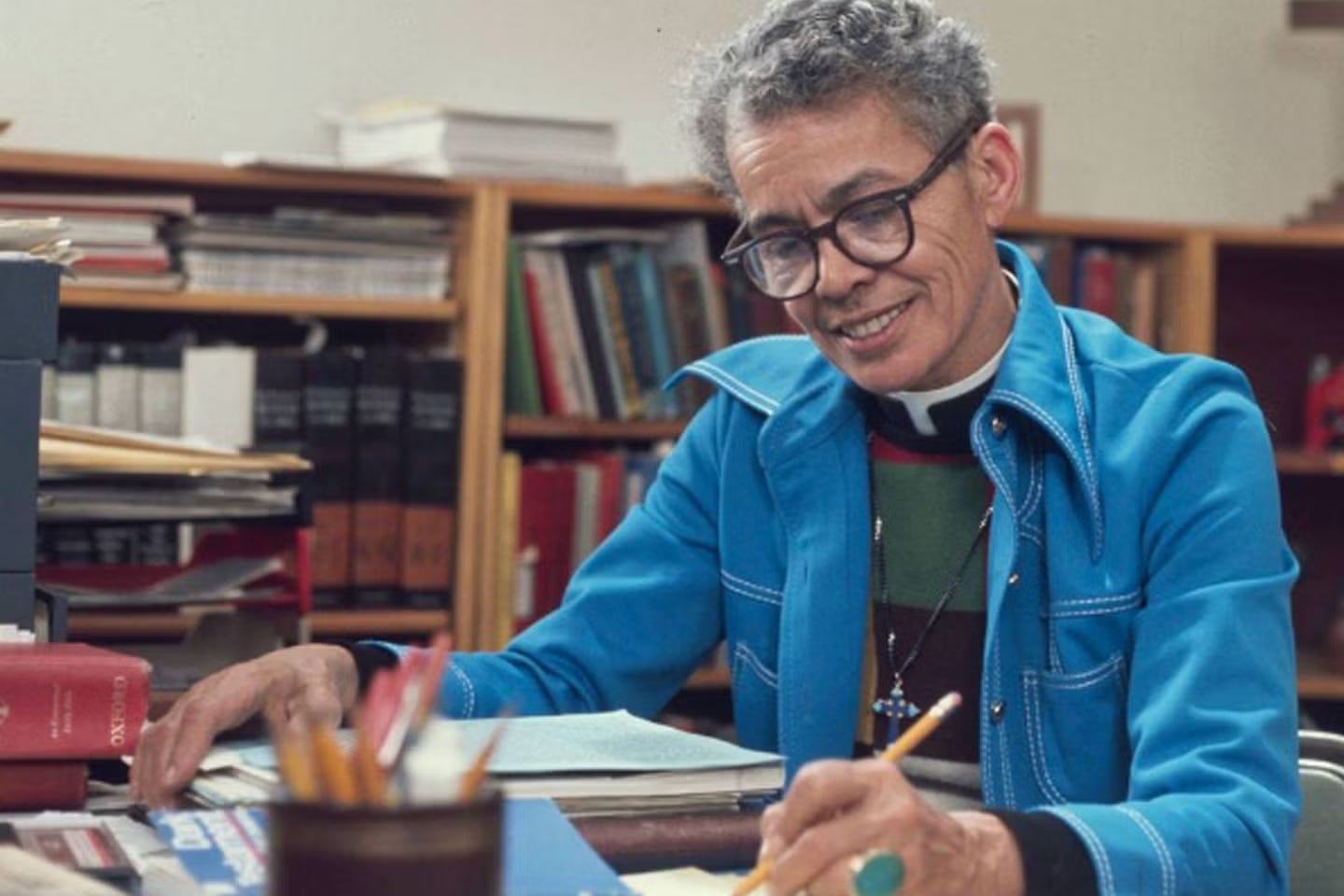
Visionary legal scholar and civil rights strategist, Pauli Murray laid the intellectual groundwork for gender equality and challenged racial segregation at its core, daring the United States to embrace a more expansive vision of human rights. [Read more]
Browse the full archive here.
Jessie Jackson was in Jacksonville in 2018, I was the photographer on task, I did not think her remembered me, but he did, he was walking to his van, he said “Tonya picture lady!” You not going to take my picture? Hurry up it’s hot!
We both laughed and I gave him a hug! Memories!!
A beautiful, heartwarming story!!