
With Honors
Vol. 2, Issue 2 | February 9, 2026 - February 15, 2026
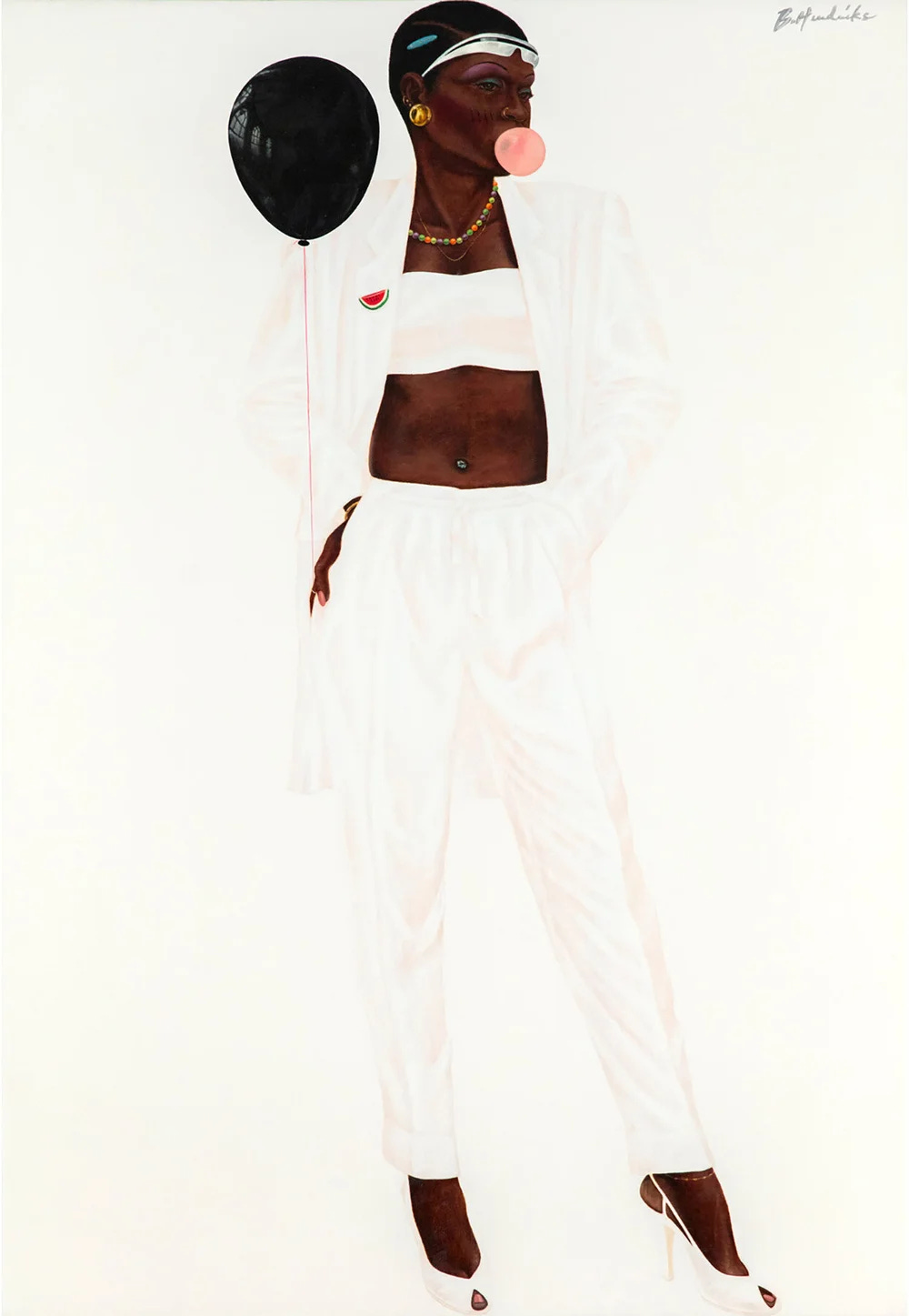
I consider myself bound by honor to develop and uphold high standards of honesty and behavior; to strive for full intellectual and moral stature; to realize my social and academic responsibility in the community. To attain these ideals, I do therefore accept this Honor System as my way of life.
CURATOR’S NOTE
She unpacked in a room built for two.
Two beds, two desks, two closets—architecture that anticipated companionship, the late-night conversations that shape who you become, the heartbreaks and small revelations of young womanhood.
Down the hall: laughter, furniture scraping across floors, voices negotiating which side of the room, which desk, whose posters would go where. The sounds of 18-year-old girls beginning friendships.
She was 18. She was a girl. And she was alone.
After two years, she left.
I went searching for her decades later. I wanted to know if what she’d experienced looked like what I was experiencing—if the isolation had shape-shifted or if it still wore the same face.
The yearbooks sat on the bottom two shelves, far left corner of the library. I turned pages looking for her face. Year after year. Page after page. I found students in blackface.
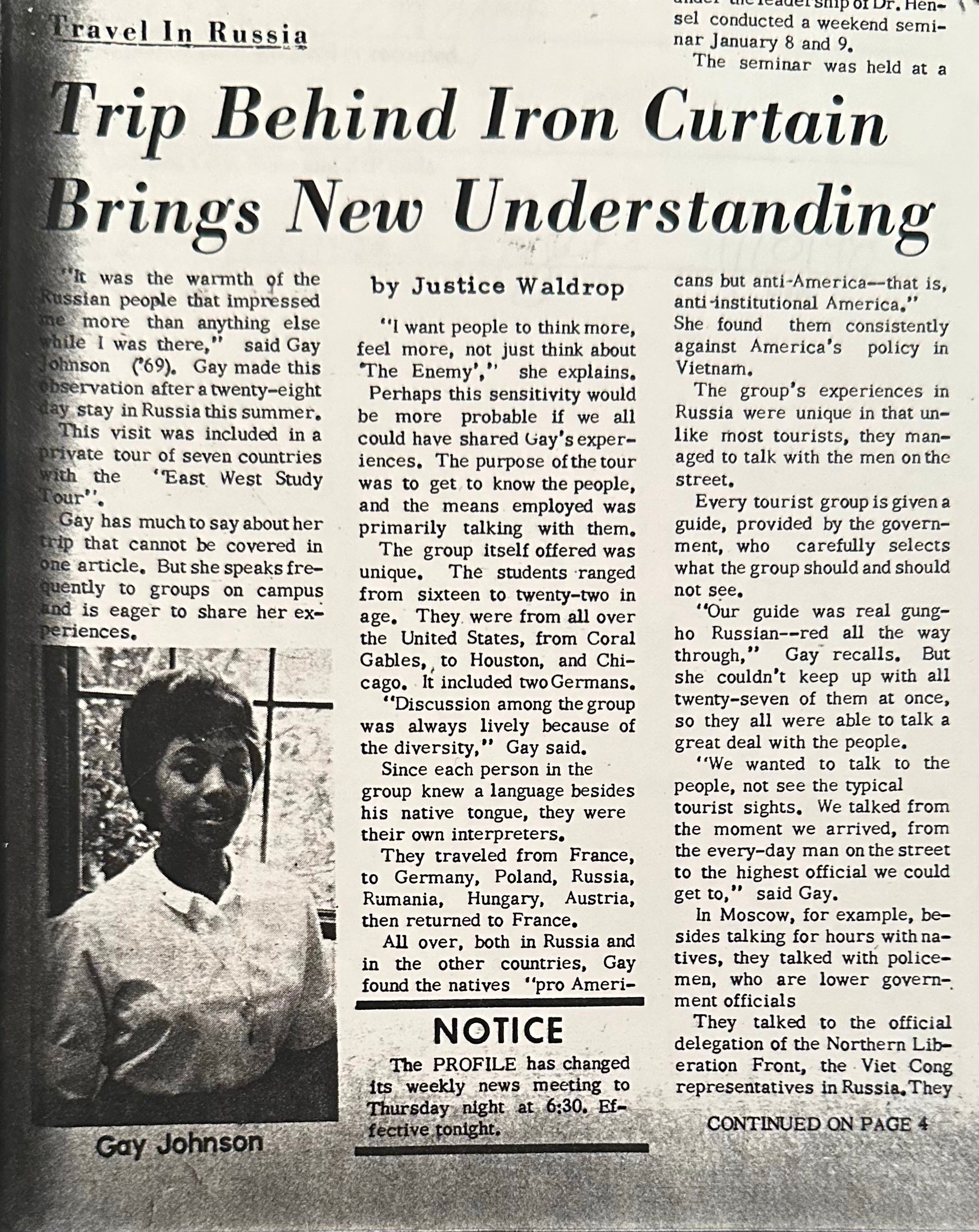
She appeared once, in the student newspaper—a photograph at the bottom of the page, maybe two inches by two and a half. She’d spent the summer in Russia.
“I want people to think more, feel more, not just think about ‘The Enemy,’” she told the interviewer.
I wanted to know her.
She had unpacked in a room built for two. By senior year, I had learned to make myself small enough to fit in the same spaces.
I was the only Black English Literature major in my year. Fewer than a dozen Black women in our entire graduating class.
I wanted to make a documentary about her story. My advisor agreed to shepherd it. We met in his office every week.
That Fall semester in my Film professor’s classroom, we read The Clansman. Watched Birth of a Nation—the first motion picture screened at the White House, our professor told us.
I wrote about how close-ups could create intimacy with violence. How cross-cutting could manufacture a threat where none existed. How the iris shot could frame Black bodies as danger. He called on me in class discussions, when I argued that you cannot separate technique from ideology. “Excellent analysis,” he said.
My Film professor was chair of the English department.
The English faculty voted. My documentary project was denied. Film, they said, wasn’t English.
I revised the proposal. Expanded the bibliography. They voted again. Denied.
A third vote. A third denial.
The librarian understood what I was searching for. She called one afternoon and asked me to come to the circulation desk. She’d pulled what she could find from the college archives—board of trustees minutes from the 1960s, notes from faculty meetings, correspondence between the college president and the Greater Atlanta Council on Human Relations.
“Some discussions,” she said, holding my gaze, “must have been off the record.” One eyebrow lifted.
I sat across from the Dean of Students with a formal request for full access to the archives. Her hands folded, unfolded, folded again. She’d been here in the 1960s, she said, a student when the debates were happening. The college had a history, yes—but it had always welcomed everyone. Behind her, yearbooks lined the wall. All those years. All those perfectly preserved smiles. She called me friend.
Word traveled. A faculty member from the English department mentioned my project at a cocktail hour. The president sent for me.
I borrowed a red suit from my best friend, the same suit I wore for senior pictures. I sat outside the president’s office. My hands went cold. Sweat pooled beneath my arms, along my spine.
I’d heard what happened to students. The ones whose things were packed for them. I’d been asking questions professionally since I was thirteen. But this was different. This was the first time the cost of asking questions might mean losing everything.
When she called me in, her office was open, airy. The windows in the back flooded the room with light. Photographs documenting decades of campus life, buildings rising and changing, ceremonies marking milestones. She’d been a student here too, in the 1960s. We talked about those years—what she remembered, what had changed.
At the end of our conversation, she said yes.
After that, my campus mailbox brimmed with revelation. Students I’d never met, women who’d been watching to see if this project would survive. They wrote on whatever they had—paper torn from spiral notebooks, pages from composition books, colored index cards. One card, bright pink, said only: I hope this helps you. Another, on lined paper in careful script: I will help with your project in any way I can.
Black women holding each other in the dark.
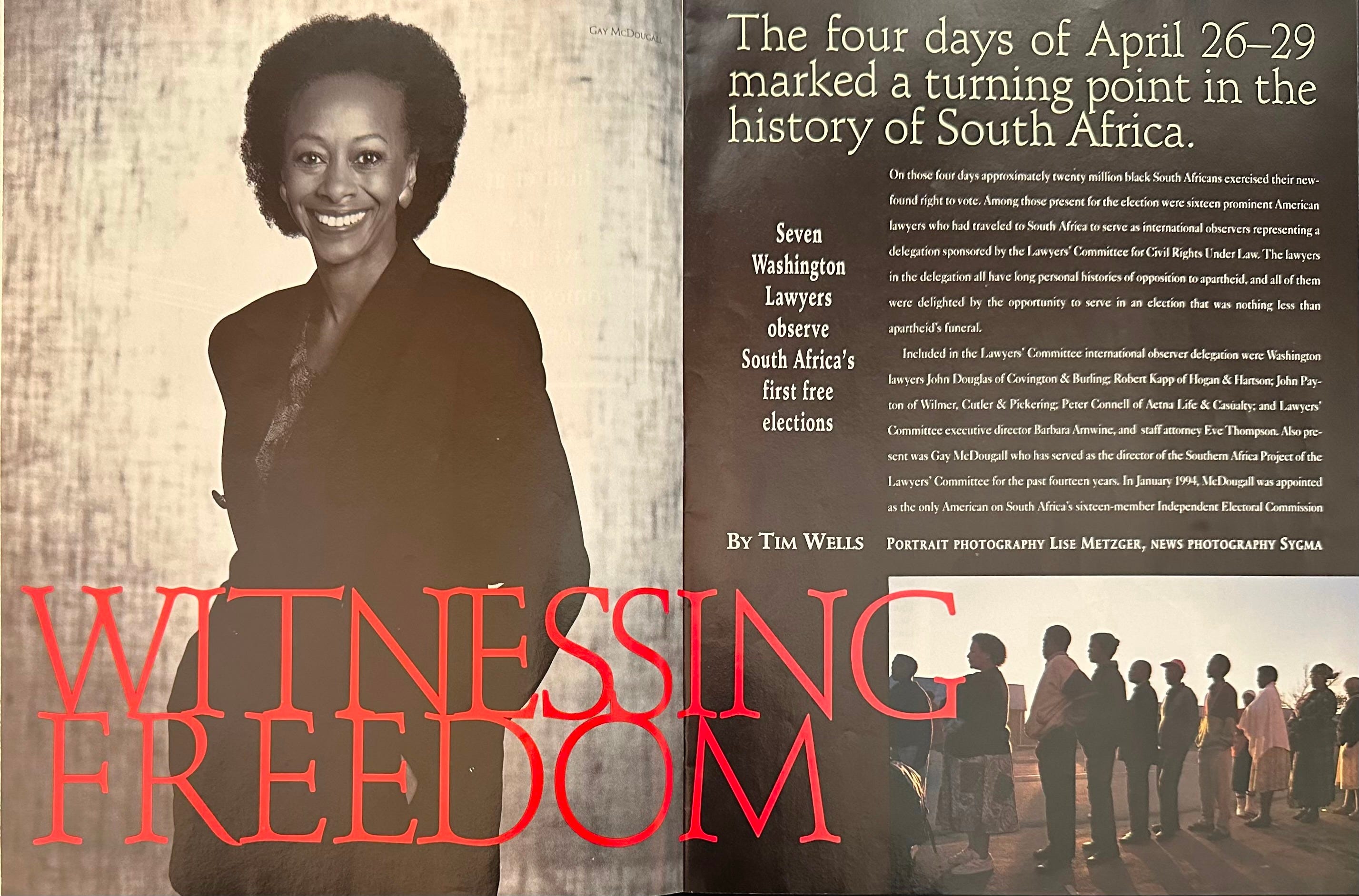
A member of the English faculty appeared in my advisor’s office one afternoon when he knew I’d be there. He handed me a magazine without preamble. Inside: a profile of international human rights lawyers in Washington, D.C. Someone who’d worked at the United Nations. Someone who’d shaped frameworks for addressing racial discrimination across borders. Her early biography included integrating a small women’s college in the 1960s.
In 1994, she escorted Nelson Mandela to cast his first ballot as a free man in South Africa. Mandela, who’d spent 27 years imprisoned on Robben Island for resisting apartheid.
She stood beside him when he marked his choice. Bore witness to the end of one era and the beginning of another.
She’d built a life larger than the room the president meant to contain her.
I tried to return the magazine when I’d finished.
“Keep it,” the professor said.
I still have it.
Before my advisor retired, I went to see him one last time. My documentary sat on the shelf in his office. The VHS case worn from years of being pulled down and shown to students. He told me I was part of the reason the college created a Film & Media Studies minor. One course when I was a student was now eight across disciplines.
As I was leaving, I asked almost offhand whose office this had been before his.
He gave me that half-smile I’d come to recognize as the expression he wore when pointing out ironies too bitter to laugh at directly, said her name.
She’d graduated in 1962. Three years before the college admitted its first Black student. Three years when campus newspapers were running editorials debating whether integration should happen. She’d been here. Reading those papers. Living through arguments about humanity rendered as intellectual exercise.
I’d interviewed her for the documentary, asked what she remembered about her years as a student. She said she remembered nothing.
An endowed professorship bears her name.
The dean who called me friend has a center named in her honor.
The president who walked an 18-year-old girl to a room built for two and told her she’d be more comfortable alone has his name on a building.
The Gay Johnson McDougall Center for Global Diversity and Inclusion sits on the third floor.
—Khalilah L. Liptrot
Curator, The Black Third
FEATURED PORTRAIT
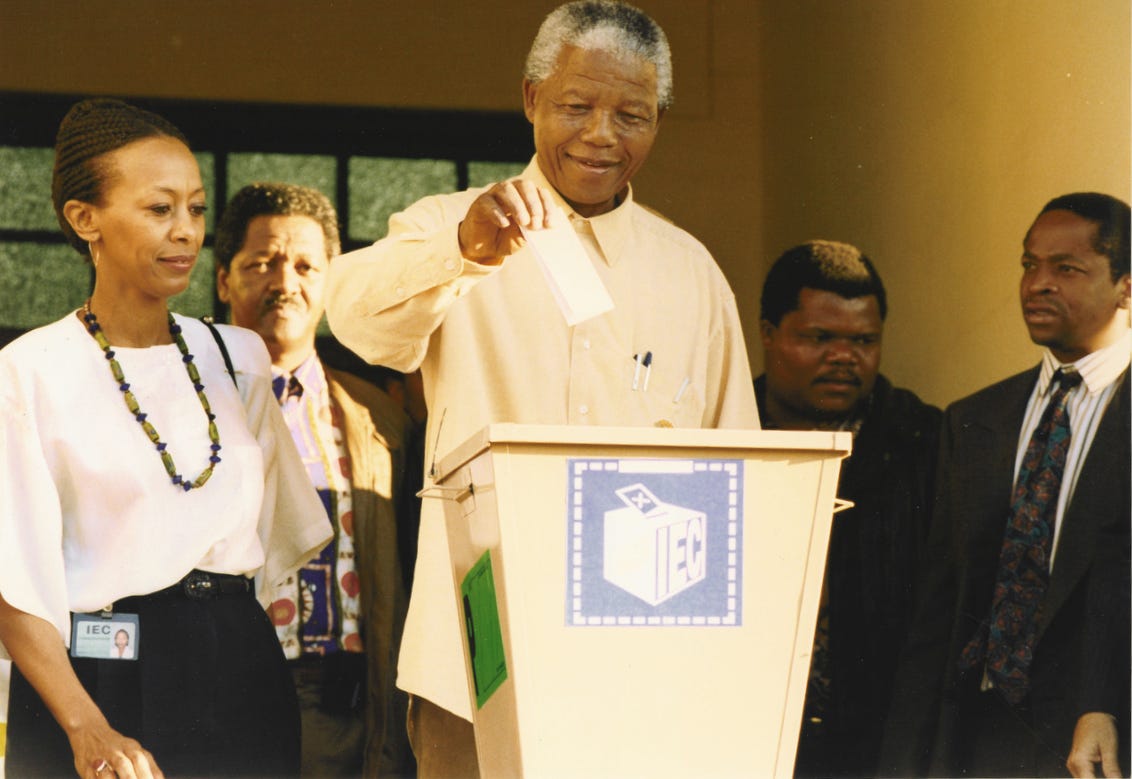
Gay Johnson McDougall served as the UN's Independent Expert on Minority Issues, holding governments accountable for racial discrimination worldwide. [Read more]
Browse the full archive here.
Thank you. That you read it twice means more than you know.
Oh your essay moved someone in me that feels ancient. Tears streamed since reading "this was the first time the cost of asking questions might mean losing everything." Just as if I was there... A voice I me said right after... "And so you stopped asking questions to stay safe in a world that didn't want to see your truth. Didn't want to face the abuse & silencing of black women. As I sit here with your essay, I'm in awe at the reminder that we women, black & brown, are magnificent, fearless, and just spectacular... To move in the background with conviction even when the whole world tries to put up barriers. Oh, in deep gratitude for your story telling, bravery, and perspective. 🙏🏽🫰🏽🫰🏽🫰🏽